Learn Advanced Excel with AI
Basic Excel is easy. Advanced Excel — VLOOKUP, pivot tables, Power Query, dynamic arrays — is where spreadsheets become powerful and formulas start breaking in ways that make no sense.
Why Microsoft Excel Has a Steep Learning Curve
The single most confusing concept in Excel is absolute vs relative cell references. When you write =A1*B1 and copy it down, the references shift — A1 becomes A2, B1 becomes B2. This is usually what you want. But when you copy it sideways, B1 becomes C1, and if column C is not what you intended, your formula is silently wrong. Adding dollar signs ($A$1, A$1, $A1) locks row, column, or both — and getting this wrong produces results that look plausible but are incorrect. You can stare at a spreadsheet for an hour before realizing the formula in cell J47 is referencing the wrong column because you forgot a single dollar sign.
VLOOKUP is the function everyone learns and then fights with. It returns #N/A when the lookup value has a trailing space, when the data types do not match (text vs number), when the lookup column is not the leftmost column, or when the range is not sorted and you forgot to set the last argument to FALSE. Each of these produces the same error with no indication of which one is the cause.
Power Query is Excel's data transformation engine and it is genuinely powerful — merge tables, unpivot data, clean text, combine files from a folder. But it uses its own M language, its own editor, and its own refresh logic. Most Excel users do not know it exists, and those who find it are intimidated by the formula bar showing code like Table.TransformColumnTypes(Source, {{"Date", type date}}).
How Talk To Your Computer Changes This
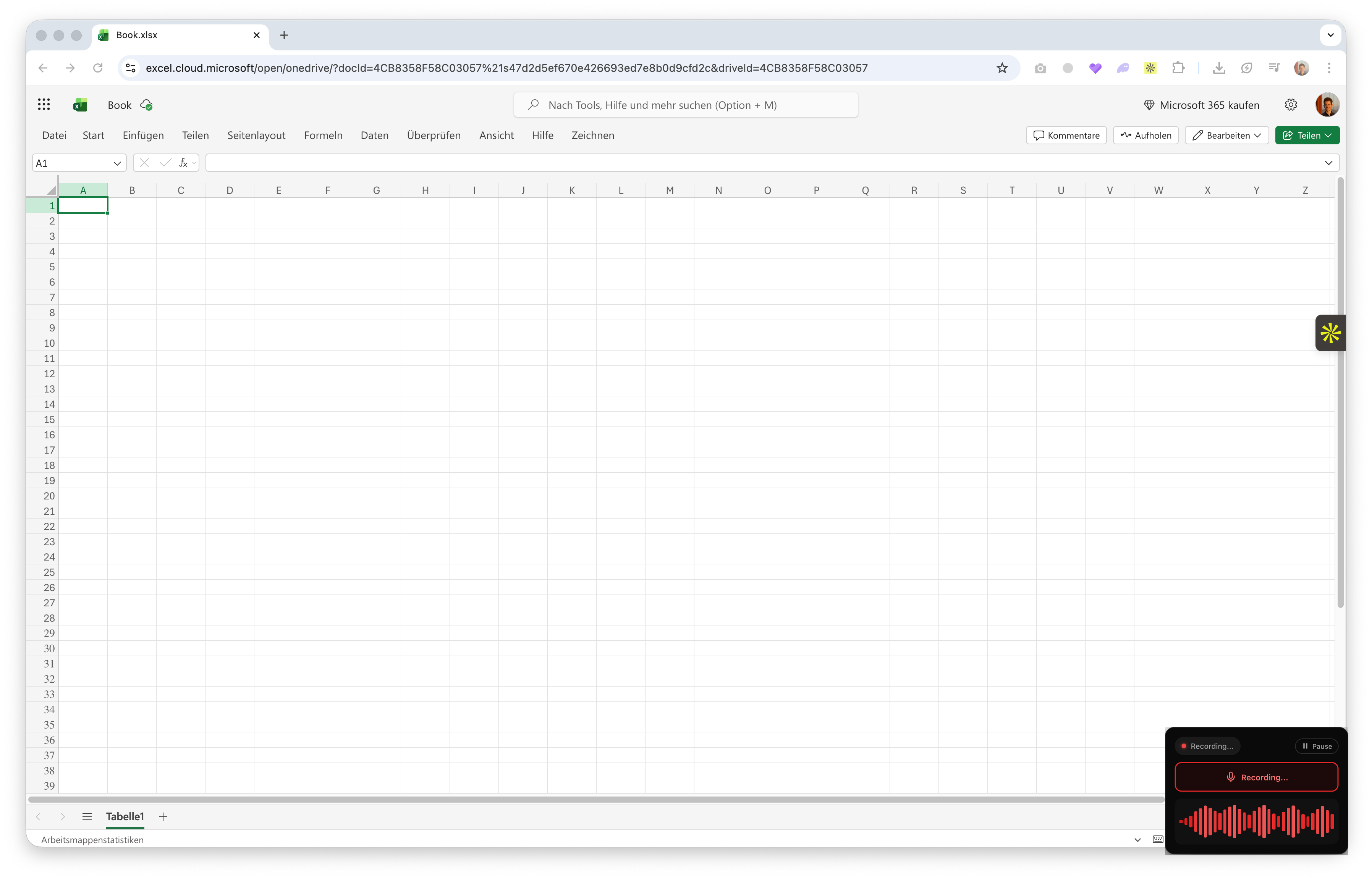
Share your spreadsheet and ask: "why does my VLOOKUP return #N/A when I can clearly see the value in the column?" Talk To Your Computer can see your formula, your data, and the lookup range. It might spot that your lookup value is formatted as text while the column contains numbers — a classic invisible mismatch that produces #N/A every time.
For formula building, just describe what you want: "I want to sum all sales from column D where the region in column A is East." You get the exact SUMIF formula back, with the right references for your actual data layout. No more Googling "SUMIF syntax" and translating a generic example to your spreadsheet.
What You Can Ask
Why Copy-Pasting Formulas Breaks Everything (And How to Fix It)
Every cell reference in Excel is either relative, absolute, or mixed. A1 is relative — it shifts when copied. $A$1 is absolute — it stays put. $A1 locks the column but lets the row shift. A$1 locks the row but lets the column shift. Getting this wrong is the number one cause of spreadsheet errors that look correct but produce wrong numbers.
The fix is understanding why you need each type. Referencing a tax rate in a single cell? Use $A$1. Building a multiplication table where rows and columns both matter? Use $A1 * A$1. If you are not sure, share your screen and ask: "I am copying this formula down and the result is wrong in row 10." The AI can see exactly which reference is shifting when it should not be.
VLOOKUP Is Fine But Here Is What the Pros Use Instead
VLOOKUP has a fundamental limitation: it can only look to the right. If your lookup value is in column C and the data you want is in column A, VLOOKUP cannot do it. INDEX/MATCH solves this — MATCH finds the row, INDEX returns the value from any column. It is faster on large datasets and more flexible.
If you have Microsoft 365, XLOOKUP is the modern replacement. It looks in any direction, returns errors gracefully, and has a cleaner syntax. But if you share workbooks with people on older Excel versions, XLOOKUP will show as an error on their machines. Ask Talk To Your Computer which one to use for your specific situation — it depends on your Excel version and who else uses your files.
Power Query — The Feature That Makes Excel Actually Powerful
Power Query is a data import and transformation tool built into Excel (Data tab → Get Data). It can pull data from files, databases, web pages, and APIs. It can merge tables, remove duplicates, split columns, unpivot data, and handle dozens of transformation steps — all recorded as repeatable queries that refresh with one click.
The learning curve is the M language that Power Query generates under the hood. You do not need to write M code — the visual editor handles most operations. But when you need to do something the visual editor does not support, you end up in the Advanced Editor staring at unfamiliar syntax. Ask Talk To Your Computer while you have the Power Query editor open: "how do I combine all the sheets in this workbook into one table?" and get step-by-step guidance for your specific data.
Try it free — no install needed
Share your screen. Hold the mic button. Ask anything.
Get Started Free